Pipeline Management
- Data, Strategy, Systems
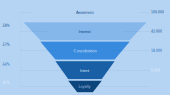
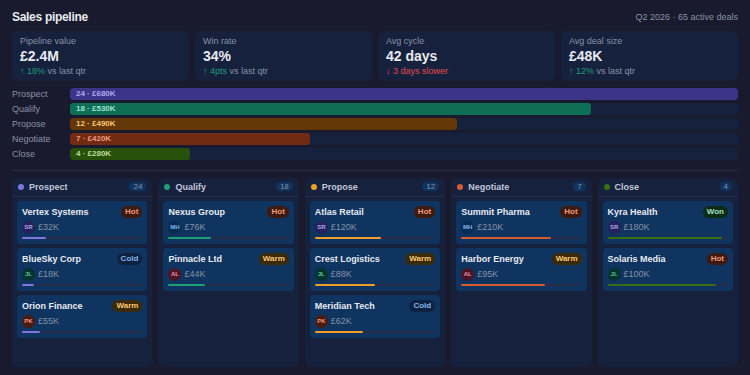
A Sales Pipeline is a visual representation of where prospects are in the buying process, which acts as a map showing the touchpoints and decision points they must cross before becoming a customer. Pipeline Management is the structured process of organising, analysing and optimising this pipeline. Applied effectively this can improve the performance of each stage of the pipeline and the conversion rates between its stages, and can provide quantitative insight into the value of each stage and the overall pipeline.
Stages of a Sales Pipeline:
- Prospecting
- Lead Qualification
- Initial Contact
- Proposal
- Negotiation
- Closing
- Post Sales
Each of these stages should be well defined, with with clear rules on what determines a move to the next stage, and with clear roles and responsibilities for the handling of customers. Implemented correctly this allows the creation of an effective Sales plan, with a schedule of actions for each stage and customers prioritised based on defined rules. These actions can be managed using CRM tools, with deadlines and checks set and allocated to the relevant team member. This ensures all actions are completed in a timely manner and, by recording all actions and events, provides data on the relative performance of the stages of the pipeline, continually highlighting successes and areas for improvement. CRM tools also allow parts of the pipeline process to be automated, improving both performance and the costs of serving leads.
In addition to providing data for processes improvements, a properly managed Sales Pipeline is an invaluable resource for Strategic Planning. The conversion probability of a lead changes (increases) as it moves through the sales pipeline. Rules can be set to assign a conversion probability for each stage, and can be refined using additional identifiers based on customer attributes. Applying these conversion rates to the value of a each customer's potential business then provides a value for each stage of the pipeline and the overall pipeline. Expected conversion times can also be set in the same way. Using these methods organisations can produce plans forecasting future revenue and profit changes as well as changes to volumes across the business such as customer service calls, invoicing and required production levels. This data is key in managing the changes which result from a changing customer base and is a key consideration for future plans.
A basic Sales Pipeline can be created quickly using information that is readily accessible to your business and can be of immediate value in providing a view on the value of leads. From this starting point the details can be refined using lead attributes and evaluation of previous trends, with continuous iterations of the rules as the results are used to improve performance. Once in place reports can be created to highlight the insight produced by the pipeline and to guide business decisions. Kontekx can help at all stages of this process, from simple reports to integration with your CRM and its automation capabilities, and in understanding how to apply the insights produced to improve business performance.