Databases
- Data, Systems
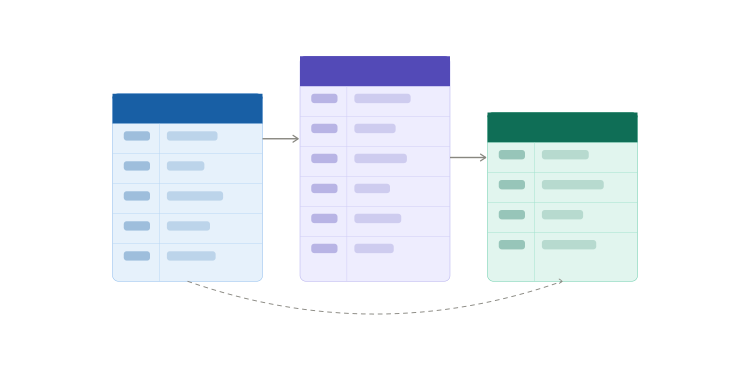
A Database is an organised collection of information stored electronically in a computer system. These systems can hold vast amounts of information (data) with this structured efficiently and also in ways tailored to the specific needs of an organistion. Their design allows allows data to be easily updated and accessed, with multiple users able to use the same source data simultaneously. Once in place Databases provide an initial framework for the creation of data pipelines - automated flows of data from multiple sources, which are then collated and structured as required before feeding other systems.
One of the most valuable features of Databases is that they allow organisations to create and utilise a 'single source of truth'. Organisations of all sizes work with a multitude of data generating systems, with the data held across various files and back-ends. Using such unstructured data can create conflicting views of important information, inhibiting accurate decision making and wasting resources. Databases allow this disparate and unstructured data to be collated in one location and transformed according to organisational standards and requirements, with users then able to access this with the assurance that is accurate and consistent across the business.
Databases can be used to implement Automation in organisations. The extraction of the data from source systems can be completely automated, and often with real time updates, in contrast to the manual downloading and combination of files. The transformation of this data can also be automated, and in ways not possible manually, and this can then be used to feed into other automated processes. Once a Database system is established the opportunities for automation can multiply.
Reporting & Analytics capabilities can be greatly expanded with the implementation of Databases. Data can be aggregated and analysed in unique ways within the databases themselves and the results can then be exported into reports and Business Intelligence tools, offering interactive dashboards which can be shared across wide user bases. The data can also feed more complex processes such as Machine Learning and Predictive Modelling. All steps can be automated, providing a wealth of insight with minimal resources required for updating.
Core Components of Databases:
Data: The actual information being stored, such as customer names, sales figures, or product inventory.
Database Management System (DBMS):The software layer that interacts with users and applications to handle data storage, security, and retrieval.
Database Schema:A blueprint or structural design that defines how the data is organised into tables, fields, and relationships.
For small businesses creating and implementing Database systems may not seem viable, in terms of the complexity and expected cost. There are however a wide range of systems available, with suitability extending to the smallest of organisations. MS Access is a Microsoft Database software included in the MS Office Suite (so part of most businesses existing tools), which is a basic yet fully functional tool providing many of the benefits of more complex systems. Beyond this there is a wide range of server Database tools and cloud based solutions available, with cost determined by usage and which can be managed with spend limits. Kontekx are experts in the creation, implementation and usage of these systems, with a particular focus on realising the full value of the data they produce.